Soy isoflavones: what they are, and what the research measured
Reviewed by the research team at PlantBio Research.
The short answer
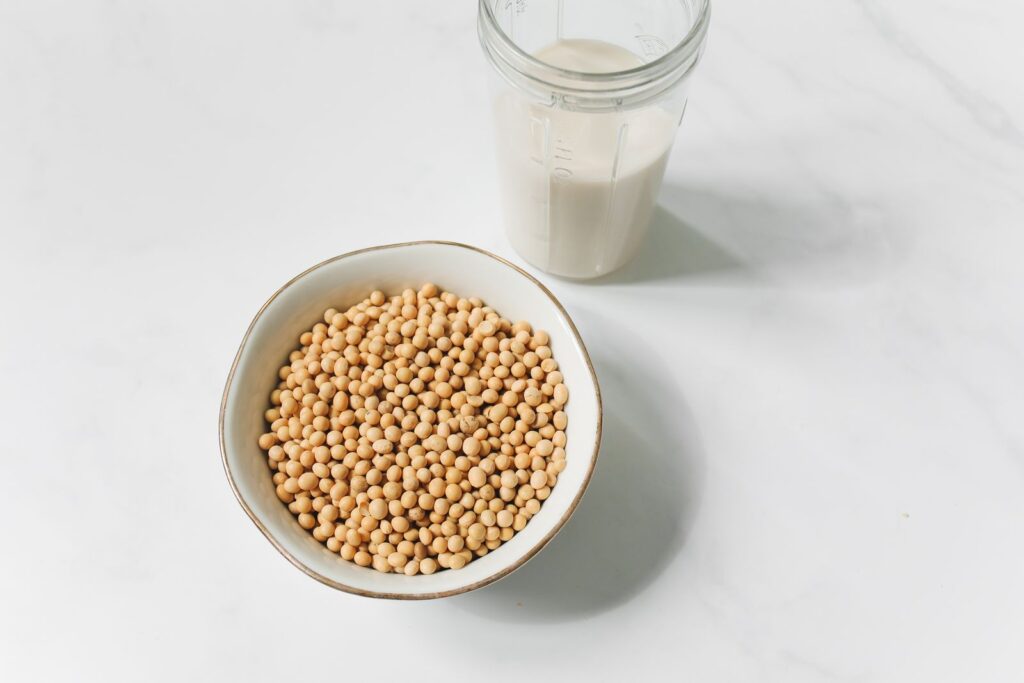
Soy isoflavones are natural compounds in soybeans. Their shape is close enough to oestrogen that they can attach to some of the same receptors in the body, though the effect is far weaker than your own oestrogen. That is why they are the most studied plant compound in menopause research.
If you have looked at anything for the menopause years, you have met the word isoflavone. It is usually printed without explanation, as though everyone already knows. Here is the plain version.
What soy isoflavones actually are
They are compounds that occur naturally in soybeans. The plant makes them for its own reasons, nothing to do with us. The three that matter in soy are called genistein, daidzein and glycitein.
They belong to a wider family called phytoestrogens. “Phyto” means plant. So: plant compounds with some resemblance to oestrogen.
Why they behave a little like oestrogen
Hormones work like a key in a lock. Oestrogen travels through your blood and fits into receptors on cells, and that fit is what tells the cell to do something.
Isoflavones are shaped closely enough to oestrogen that they fit some of those same locks. Not all of them, and not tightly. The effect is much weaker than your own oestrogen, and that weakness is the point rather than a shortcoming: it is why a plant compound behaves gently where a hormone does not.
They are also selective. There are two main oestrogen receptor types, alpha and beta, and isoflavones prefer beta. Beta receptors are common in blood vessels and bone. Alpha receptors are more common in breast and womb tissue. That preference is a large part of why isoflavones have been studied so heavily for this stage of life.
What the research measured
These figures come from PlantBio Research’s own ingredient research summary. Each one describes studies on the botanical itself, not trials of any finished product.
- Hot flush frequency: around 25% lower than placebo, which is roughly 57% of the maximum effect measured for estradiol.
- Lumbar bone mineral density: measurable improvement.
- Pooled analyses using the Kupperman Index and the Menopause Rating Scale, both standard symptom scores: a statistically significant overall improvement.
Two honest caveats belong with those numbers. Studies on a botanical are not the same as studies on a finished formula, and results across isoflavone research vary more than a single figure suggests, partly because of the next point.
Why isoflavones work better for some women than others
This is the part almost nobody mentions, and it explains a lot of disagreement.
One of the isoflavones, daidzein, can be converted by gut bacteria into a compound called equol, which is more active than daidzein itself. Whether that conversion happens depends on which bacteria you happen to carry. Some women produce equol. Many do not.
Equol production is more common in populations with a long dietary history of soy, which includes much of Asia. It is one reason results differ between studies run in different countries, and one reason two women can take the same thing and report different experiences.
Food, or a supplement?
Soy foods contain isoflavones: tofu, tempeh, soy milk, edamame, miso. If you eat them regularly you already get some.
The practical difference is consistency. The isoflavone content of food varies with the variety of bean, the growing conditions and the processing, so what you get from a bowl of tofu one week is not what you get the next. A supplement is standardised, which means the amount is the same in every serving. Neither is better in principle. They are different tools.
Soy isoflavone is one of the fifteen ingredients in MenoLuv, alongside black mulberry, ashwagandha, chasteberry and inulin. The full list and the nutrition panel are on the product page. If you are here because of the warm nights specifically, what actually causes a hot flush explains the mechanism.
Who should check with a doctor first
Ask before starting, rather than after, if any of these apply to you: you are pregnant, breastfeeding or trying to conceive; you take medication for your thyroid; you take a blood thinner; you are on hormone therapy; or you have a history of a hormone-sensitive condition. Soy is also a common allergen, so it is not for you if you react to it.
None of that is a warning that isoflavones are risky. It is that these are the situations where a conversation is genuinely useful, and a website cannot have it with you.
Common questions
Are soy isoflavones the same as oestrogen?
No. They are plant compounds with a similar enough shape to fit some of the same receptors, and the effect is far weaker than your own oestrogen. They are not a hormone and they are not hormone therapy.
How long before isoflavones make a difference?
Studies in this area generally run over weeks to months rather than days, and are usually measured at eight to twelve weeks. Consistency matters more than dose here.
Can I just eat more tofu instead?
You will get isoflavones from soy foods, yes. The difference is that the amount in food varies with the bean, the growing conditions and the processing, while a standardised supplement gives you the same amount every day.
Why do isoflavones seem to help some women and not others?
Partly gut bacteria. Some women convert daidzein into equol, a more active compound, and many do not. Equol production is more common where soy has long been part of the diet.
Is soy safe if I have a family history of breast cancer?
That is a question for your doctor, who knows your history. It is not one a website should answer, and anyone who answers it confidently without knowing you is not being careful with you.
Sources
- PlantBio Research, ingredient research summary (MenoLuv formulation dossier). Figures above are drawn from this document and describe studies on the individual botanicals.
- National Institute for Health and Care Excellence, guideline NG23, Menopause: identification and management. nice.org.uk
- The Menopause Society, patient education materials. menopause.org
Last reviewed by the research team at PlantBio Research.
A note on this article. This is general information about the menopause years, not medical advice, and it is not a substitute for talking to your doctor or pharmacist. If you are pregnant, breastfeeding, trying to conceive, or taking prescribed medication, speak to a health professional before starting any supplement. LUQUA products contain soy.
Keep reading
Why menopause disrupts your sleep, and what actually helps
Sleep breaks in these years for three separate reasons that usually overlap: night sweats wake you, falling hormones change the structure of...
What causes hot flushes, and why they are worse at night
A hot flush starts in your brain, not your skin. As oestrogen falls, the part of the brain that controls body temperature...
Perimenopause or menopause: how to tell which stage you are in
Perimenopause is the years when your periods become unpredictable and symptoms begin. Menopause itself is a single day: twelve straight months with...